28th Dec2011

I Am Not A Rapper Presents: ___ Podcast – Season 1,Episode 6 – #TheWonderYearPodcast (2011 Finale)

by iSpit
play audio I Am Not A Rapper Presents:     Podcast – Season 1,Episode 6 – #TheWonderYearPodcast (2011 Finale)

Wonder Year 1 I Am Not A Rapper Presents:     Podcast – Season 1,Episode 6 – #TheWonderYearPodcast (2011 Finale)

**BREAKING NEWS!!!**… Another Wednesday, Another Podcast, GET YOUR HEADPHONES, LOCK YOUR DOORS!!

We had the unusual suspects again (which might actually turn out to be the name of this podcast in 2012…stay tuned): Spit x Kevin Golden x DJ Nastee Naj  Mr. Blair  x Queen MKS

Sponsor: GoToMyPC allows easy to access your computer via you iPhone Try it Free for 30 Days! Click GoToMyPC to begin

First, Aliens attacked us in the beginning of the podcast… they came back after the first break…but eventually they left

Topics Discussed: Missing Shonnie  |  “…and we’re back..”  |  Uncle Luke Movie + We advocate Luke for Mayor |  Memorable Moments From 2011  |  QueensMKS - Grinds My Gears  |  $1 Dutches  |  Sams from Lean On Me Buying 200 Pds of Weed  |  Tyler Perry Buys American Airlines  |  Sam Hurd’s bricks of NFL cocaine  |  Ike Turner’s Autobiography | Milk Carton children  |  The War in Iraq…Over?  | Ghetto Names  | Win A date with Kevin or Najee

Shonnie Missing1 I Am Not A Rapper Presents:     Podcast – Season 1,Episode 6 – #TheWonderYearPodcast (2011 Finale)YOU CAN STILL EMAIL YOUR #FML STORIES (OR SHONNIE SIGHTINGS) TO IAMNOTARAPPER@GMAIL.COM

This weeks musical interludes provided by:

1.) Face Off – Once

2.) Skizzy Mars - Shangri-La

3.) Chase And Status feat. Delilah – Time (RIOT-87-Remix)

4.) Ghostwridah - United Center Intro (Feat Nehemie)

The Wonder Year 3 I Am Not A Rapper Presents:     Podcast – Season 1,Episode 6 – #TheWonderYearPodcast (2011 Finale)

Click here for reuse options!

Copyright 2011 I AM NOT A RAPPER

28th Dec2011

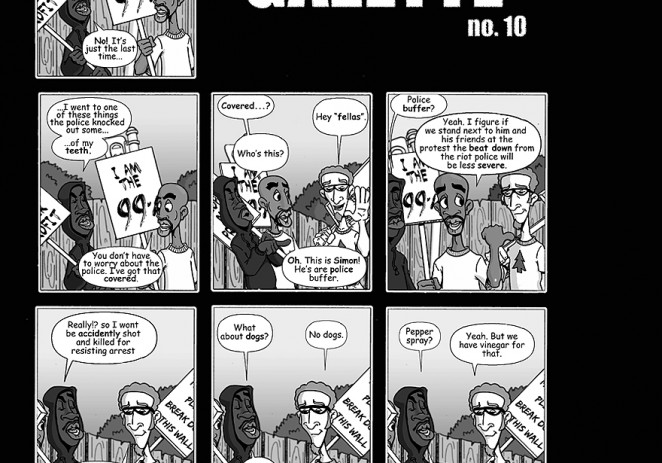
The Gazette No.10 By Phillip Lee Jr (Comic)

by iSpit

g10 web 870x1024 The Gazette No.10 By Phillip Lee Jr (Comic)

By Phillip Lee Jr

Click here for reuse options!

Copyright 2011 I AM NOT A RAPPER

28th Dec2011

So Everybody Got An iPhone For Christmas huh?

by iSpit

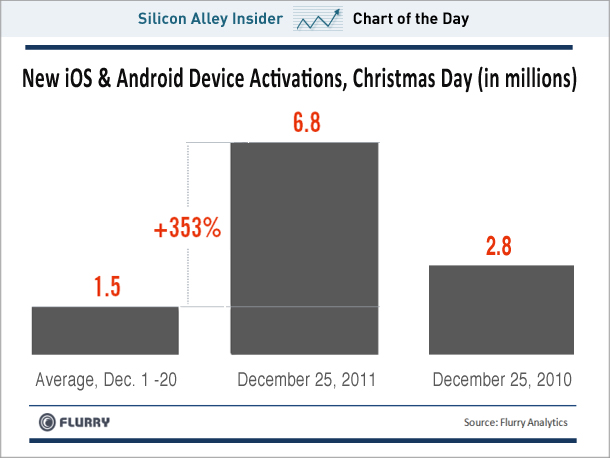
chart of the day apple and google get a record breaking christmas So Everybody Got An iPhone For Christmas huh?Apple and Google activated a record breaking number of mobile devices this Christmas, according to Flurry analytics, which delivers mobile analytics to developers. Flurry has 140,000 apps running its software, and believes it can track every new Android or iOS device activated.

Between December 1 and 20, 1.5 million Android and iOS devices were activated daily on average. On Christmas day, a record breaking 6.8 million devices were activated, a 353% increase over the rest of the month. It’s also much better than 2010, when 2.8 million devices were activated

Click here for reuse options!

Copyright 2011 I AM NOT A RAPPER

27th Dec2011

Ralph Lauren – The Oprah Interview (Full Video)

by iSpit

Oprah Interviews Ralph Lauren from The Nobility on Vimeo.

Click here for reuse options!

Copyright 2011 I AM NOT A RAPPER

27th Dec2011

Hank McCoy – The Diabolical (69 Songs Produced By Hank McCoy)

by iSpit

2080701c277811e19896123138142014 7 Hank McCoy   The Diabolical (69 Songs Produced By Hank McCoy)Up & coming Philly producer Hank McCoy releases an @OfficiallyIce-esque folder of every song (almost) he has ever produced. Hank is responsible for some of your favorite current Philly bangers as well as @HankMcCoyBeats" href="http://iamnotarapperispit.com/2011/03/10/20684" target="_blank">These @ChillMoody x @HankMcCoyBeats – #AndTheyStillLoveUsBack (Valentine’s Mixtape)" href="http://iamnotarapperispit.com/2011/02/14/19002" target="_blank">songs @ChillMoody x @BoogiemanDela x @AntwandavisEST x @HankMccoyBeats – Seek & dESTroy" href="http://iamnotarapperispit.com/2011/01/21/18355" target="_blank">we’ve @ChillMoody Feat @LostCauze – #HMmtbtCaRroi (Prod. @HankMcCoyBeats)" href="http://iamnotarapperispit.com/2011/03/07/20606" target="_blank">posted.

Follow Hank –> @HankMcCoybeats

Hank McCoy – The Diabolocial (69 Songs Produced By Hank McCoy)

THIS THURSDAY –>

AhsZMOQCQAEvxt2.jpg large Hank McCoy   The Diabolical (69 Songs Produced By Hank McCoy)

Click here for reuse options!

Copyright 2011 I AM NOT A RAPPER

27th Dec2011

Antwan Davis – Break It Down Remix Feat RediRoc, Boogieman Dela & Chic Raw (Music Video)

by iSpit


Download Video or MP3 -Iamnotarapperispit.com

P3Movement artist “Antwan Davis” teamed up with ApeGang RediRoc, Chic Raw and P3 artist Boogieman Dela for Break it down Remix Produced by Wesmanchild. Video Directed by Marcus X (@MrMarcusX) this will be a bonus song off his upcoming CD “Established” coming soon!

Break It Down Rmx (Explicit)

@AntwanDavisEST
@RediRoc215
@ChicRaw
@BoogiemanDela
@Wesmanchild
www.AntwanDavis.com

Click here for reuse options!

Copyright 2011 I AM NOT A RAPPER

27th Dec2011

President Obama Signs NDAA Detention Rules Martial Law Bill

by iSpit

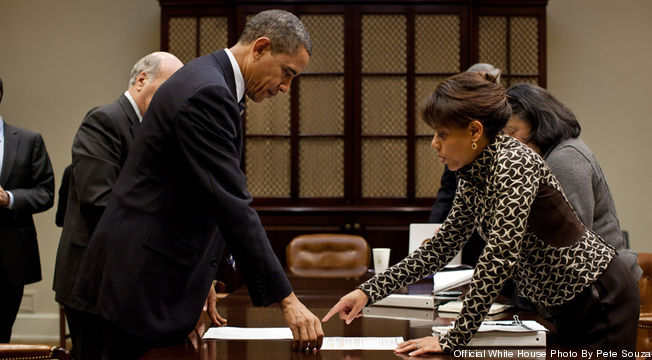
2 2011 year end 29 obama barnes cropped proto custom 28 President Obama Signs NDAA Detention Rules Martial Law BillO_O

Attorney General Eric Holder confirmed speculation Wednesday that President Barack Obama would issue a signing statement when he makes the National Defense Authorization Act (NDAA) and its controversial detention provisions law.

“We made really substantial progress in moving from something that was really unacceptable to the administration to something with which we still have problems,” Holder said in response to a question from the Wall Street Journal’s Evan Perez. “But I think through these procedures, with these regulations we will be crafting, we can minimize the problems that will actually affect us in an operational way.”

Holder said the language of the NDAA had been moved in a “substantial way” from some of the original language which led the president to issue a veto threat.

“So we are in a better place, I think the regulations, procedures that will help, and we’ll also have a signing statement from the president” which will help clarify how they view the law, Holder said

Click here for reuse options!

Copyright 2011 I AM NOT A RAPPER

27th Dec2011

WTF?: Andre Nickatina – Call The Dealer (Music Video)

by iSpit


Download Video or MP3 -Iamnotarapperispit.com

I normally wouldnt do this but uh… this sh*t is wack

…like really wack…

but its funny wack…

I mean

…kinda

I just cant see me enjoying that advocation of cocaine sniffing for sex… There are too many other ways to get sex.

Click here for reuse options!

Copyright 2011 I AM NOT A RAPPER

27th Dec2011

International Test Scores, Irrelevant Policies

by iSpit

pisa sci2 f International Test Scores, Irrelevant Policies

Perhaps no research finding has influenced education policy more, or been subject to greater misinterpretation, than our ranking on international mathematics and science tests.

Previous critiques of international comparisons have focused largely on flaws in sampling and the limitations of test scores as a measure of the quality of a nation‘s education system. These problems are still relevant. Equally important, however, are the conclusions drawn from the comparisons, even assuming their technical validity.


For decades, our rhetoric and education policies have been based on the premise that the ranking of U.S. students on international tests will lead to a decline in our nation‘s economic competitiveness and a shortage of American scientists and engineers.


It is ironic, then, that given the rhetoric and policies surrounding international test-score comparisons-much of it unsupported by evidence-little attention is paid to two of the most powerful findings of these comparisons: the strong negative effects on student performance of both family poverty and concentrations of poverty in schools.
Instead, we draw conclusions from the international studies that are not supported either by the findings of these studies or by research more generally.


“First, our rhetoric has assumed that test-score rankings are linked to a country’s economic competitiveness, yet the data for industrialized countries consistently show this assumption to be unwarranted. For example, the World Economic Forum’s 2010-2011 global-competitiveness report ranks the United States fourth, exceeded only by Switzerland, Sweden, and Singapore. Many of the countries that ranked high on test scores rank lower than the United States on competitiveness-for example, South Korea, No. 22, and Finland, No. 7.


Although we cannot predict future economic trends, we do know that test-score rankings are a poor basis upon which to understand these trends or to know what to do about them. The reason is clear: Other variables, such as outsourcing to gain access to lower-wage employees, the climate and incentives for innovation, tax rates, health-care and retirement costs, the extent of government subsidies or partnerships, protectionism, intellectual-property enforcement, natural resources, and exchange rates overwhelm mathematics and science scores in predicting economic competitiveness.
Second, we assume that U.S. students‘ performance on math and science tests is reflected in a shortage of scientists, engineers, and mathematicians. The data, however, give a quite-different picture.


The fact is the United States has both a large pool of students with the academic credentials needed to enter science and engineering fields and an ample supply-and sometimes an oversupply (for example, of chemistry Ph.D.s)-to meet labor-market demand. That is the case even though slippage occurs between the number of graduates in science and engineering and the number who work in these fields, often because some graduates choose, for example, careers in finance, investment banking, management, or entrepreneurial activity. When companies claim that they need to hire from other countries because they cannot find qualified U.S. graduates, it is more likely that they cannot find them at the wages they would prefer to pay and find it cheaper to outsource. That is not the fault of our international test-score ranking or the training of U.S. scientists and engineers.


Moreover, U.S. Bureau of Labor Statistics projections show large variations in job opportunities among science and engineering fields. For example, employment in computer-software engineering; biological science; and biomedical, civil, and environmental engineering is expected to grow faster than the average for all occupations, while growth in computer programming; chemical and materials science; and electrical, mechanical, and marine engineering is expected to be slow.


Although mathematics and physics are expected to have faster-than-average growth, the size of the market for those who seek basic-research positions is quite small.
Of the 30 occupations in the United States with the fastest rate of growth, only nine are in science and engineering fields, and 16 of the 30 do not require a college degree, according to Bureau of Labor Statistics projections. More important, of the 30 occupations expected to provide the largest numerical growth in jobs, only two (both in computer fields) are in science and engineering, and 23 do not require a college degree.


If we consider only occupations requiring a college degree or above, 15 of the top 30 fastest-growing occupations are in science and engineering; however, only eight (six in computer fields) of the 30 occupations expected to provide the largest numerical growth in jobs are in science and engineering.


At the same time that our rhetoric has linked test scores, economic competitiveness, and shortages of scientists and engineers, our education policies have been dominated by test-based accountability, apparently with the expectation that accountability requirements would close the achievement gap, raise our ranking on international comparisons, and lead to a stronger economy and an increased supply of scientists and engineers. The assumption that accountability requirements are a solution to our education problems is as incongruous as our rhetoric about the economy and scientists and engineers.


Bob Dahm Research accumulated over the years, analyzed in a 2011 National Research Council report, shows that accountability policies have not resulted in meaningful improvements in student learning and, in many instances, have created perverse incentives that weaken it. Yet, we continue to mandate accountability requirements that are not used-and in some cases are specifically discouraged-by the very countries whose test scores we most admire, including Finland and Japan.


At the same time, we have ignored the strongest evidence emerging from the international tests: the adverse effects of poverty and concentrations of poverty in schools on student performance in all countries.


Although countries can exacerbate or mitigate the impact of poverty through their social, fiscal, and education policies, and although some students do overcome the odds, the fact is the gap between high-poverty and more-affluent students remains a fundamental problem in virtually every country.


The 2009 Program for International Student Assessment, or PISA, findings for member-countries in the Organization for Economic Cooperation and Development show that, on average, close to 60 percent of the difference in reading performance between schools is accounted for by the socioeconomic status of the students attending the schools. In the United States, socioeconomic status accounts for close to 80 percent of the difference.


That gap is reflected throughout the students‘ lives. It is specifically the low-income populations and regions that are underrepresented in mathematics, science, and engineering fields, and in professions generally-and it is these populations that are at the most severe disadvantage in competing for jobs in a global economy. This is part of a much broader set of problems faced by high-poverty populations. We have one of the largest divides between rich and poor in the industrialized world. One-fifth of our children live in poverty; millions of these children are concentrated in high-poverty schools-a setting that greatly compounds the problems of poverty.


Our policy deliberations work at the fringes of these realities, with remedies that are not focused on the basic problem of poverty. The problem will not be addressed by implementing tougher accountability requirements. Nor will it be addressed by rhetoric about mathematics and science scores, economic competitiveness, and generic shortages of scientists and engineers.


Poverty, not international test-score comparisons, is the most critical problem to be addressed by our public policies. Unfortunately, our recent political polarization over budgetary priorities does not leave much room for optimism.
 
Iris C. Rotberg is a research professor of education policy at George Washington University’s Graduate School of Education and Human Development, in Washington. She is also the editor of Balancing Change and Tradition in Global Education Reform (Rowman & Littlefield Education, second edition, 2010), which describes education reforms in 16 countries.
Click here for reuse options!

Copyright 2011 I AM NOT A RAPPER

27th Dec2011

Everybody Pirates: RIAA, Homeland Security Caught Downloading Torrents

by iSpit

zd front door 2 btl zaw2 Everybody Pirates: RIAA, Homeland Security Caught Downloading Torrents

Since the release of a website that monitors nearly 20 percent of all public BitTorrent downloaders, even more pro-SOPA figures have been found downloading copyrighted material.

Earlier this week, it was found that employees of major copyright holders Sony, Universal, and Fox were all found to have illegally downloaded content through the BitTorrent network.

Today, two prominent figures in the online piracy fight were also found to be seemingly undoing all of their employers’ hard work in the fight against online piracy

Perhaps it just goes to prove that everybody pirates?

The Recording Industry of America (RIAA) is one of the most powerful lobbying groups in Hollywood, working on behalf of the record industry. It’s also one of the main proponents behind SOPA, the controversial anti-piracy act currently working its way through Congress.

The U.S. Department of Homeland Security (DHS) does what it says on the tin. Part of its remit is to seize domain names controlled or managed by the U.S. government or U.S.-based firms to crack down on online piracy.

It would therefore be highly ironic should one find that employees of both the RIAA and the Dept. of Homeland Security should be found to be illegally downloading copyrighted material through peer-to-peer networks.

But the RIAA in particular will be feeling the heat when its workers arrive at the office on Monday morning.

According to TorrentFreak, entire series episodes have been downloaded from BitTorrent sites, as well as software, and even gangster-rap music by the music industry representative body.

Last week, one Russian website, YouHaveDownloaded, opened its doors as it claimed to track around 20 percent of all public torrent downloads. You can check your IP address — as well as others — against the database to see if you or prominent others are found illegally downloading copyrighted material.

From an search-engine optimisation (SEO) perspective, Stephen Chapman discussed how users who wish to remain anonymous — and potentially out of the public eye of this site — can do so when downloading content from the web.

Considering it’s the RIAA who wants to disconnect pirates from the web, I suppose it shows that almost everyone is at risk from SOPA should the bill go through — even one of the key outfits pushing for the bill.

Though over 200,000 people work for the Dept. for Homeland Security, it is no surprise that at least someone within the government department is downloading content illegally.

But one person alone can shame the collective entity, and any ‘breach’ like this would be vital ammunition for anti-SOPA advocates.

Click here for reuse options!

Copyright 2011 I AM NOT A RAPPER

Pages:«1234567...17»

Switch to our mobile site